Table of Contents
Toggle
Experience Authentic Homemade Kung Pao Chicken
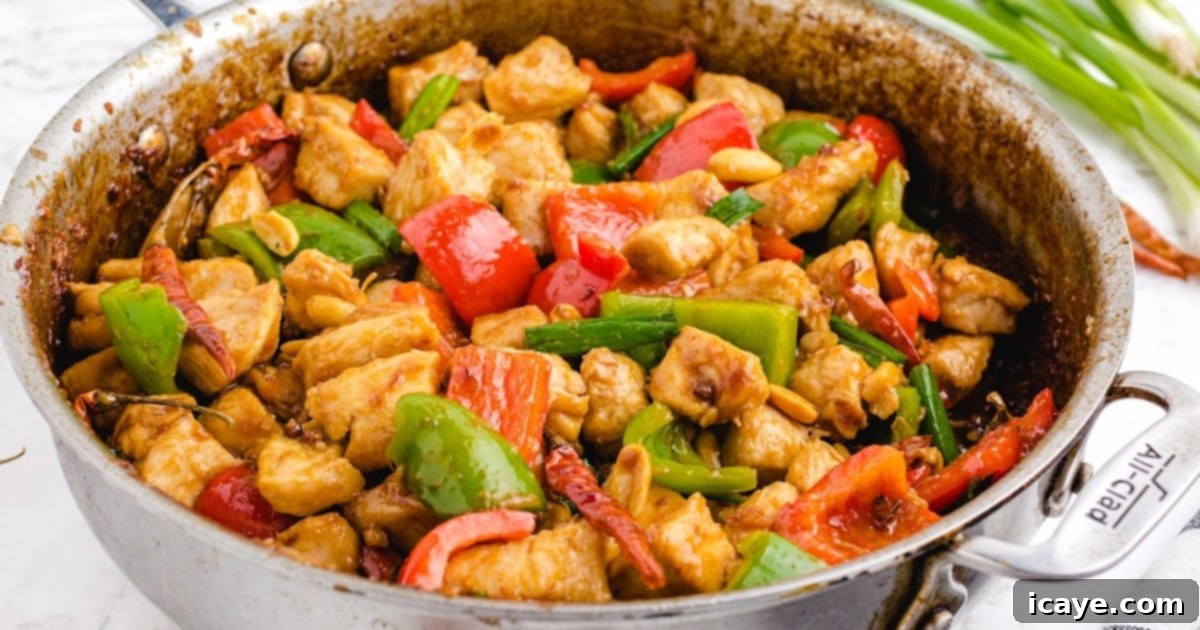
Craving the vibrant flavors of your favorite Chinese takeout? Look no further! This homemade Kung Pao Chicken recipe brings the iconic dish right to your kitchen, offering a delightful blend of juicy chicken, crisp vegetables, and a bold, addictive sauce that strikes the perfect balance of sweet, spicy, and nutty. Forget soggy, overpriced takeout and prepare a fresh, flavorful meal that will impress everyone at the dinner table. Serve it over fluffy white rice or noodles for a complete, satisfying dinner that you’ll want to make again and again.
Our authentic Kung Pao Chicken recipe is designed for ease and enjoyment, making it accessible even for novice cooks. We’ve meticulously crafted this step-by-step guide, complete with helpful photos, expert tips, and clever tricks to ensure your success every time. We also address the most frequently asked questions, clarifying common queries to make your cooking experience as smooth and enjoyable as possible. Get ready to transform simple ingredients into a culinary masterpiece in under an hour!
Explore More Delicious Recipes ⭐ Bourbon Chicken | Crockpot Orange Chicken | Mongolian Beef and Noodle Recipe
This easy Chinese chicken dish comes together in less than an hour, utilizing simple, readily available ingredients and a single skillet. Its vibrant sweet, spicy, and savory profile is sure to delight your taste buds and earn you rave reviews.
Whether you’re planning a casual weeknight dinner, hosting last-minute guests, or simply craving something extraordinary, this Kung Pao Chicken recipe is guaranteed to impress. The perfect marriage of tender chicken, crisp vegetables, and crunchy peanuts elevates this dish, making it a standout favorite.
Essential Ingredients for Perfect Kung Pao Chicken
Crafting the perfect Kung Pao Chicken starts with selecting the right ingredients. Each component plays a vital role in achieving that signature sweet, spicy, and savory flavor profile. Here’s a detailed look at what you’ll need to create this fantastic dish:
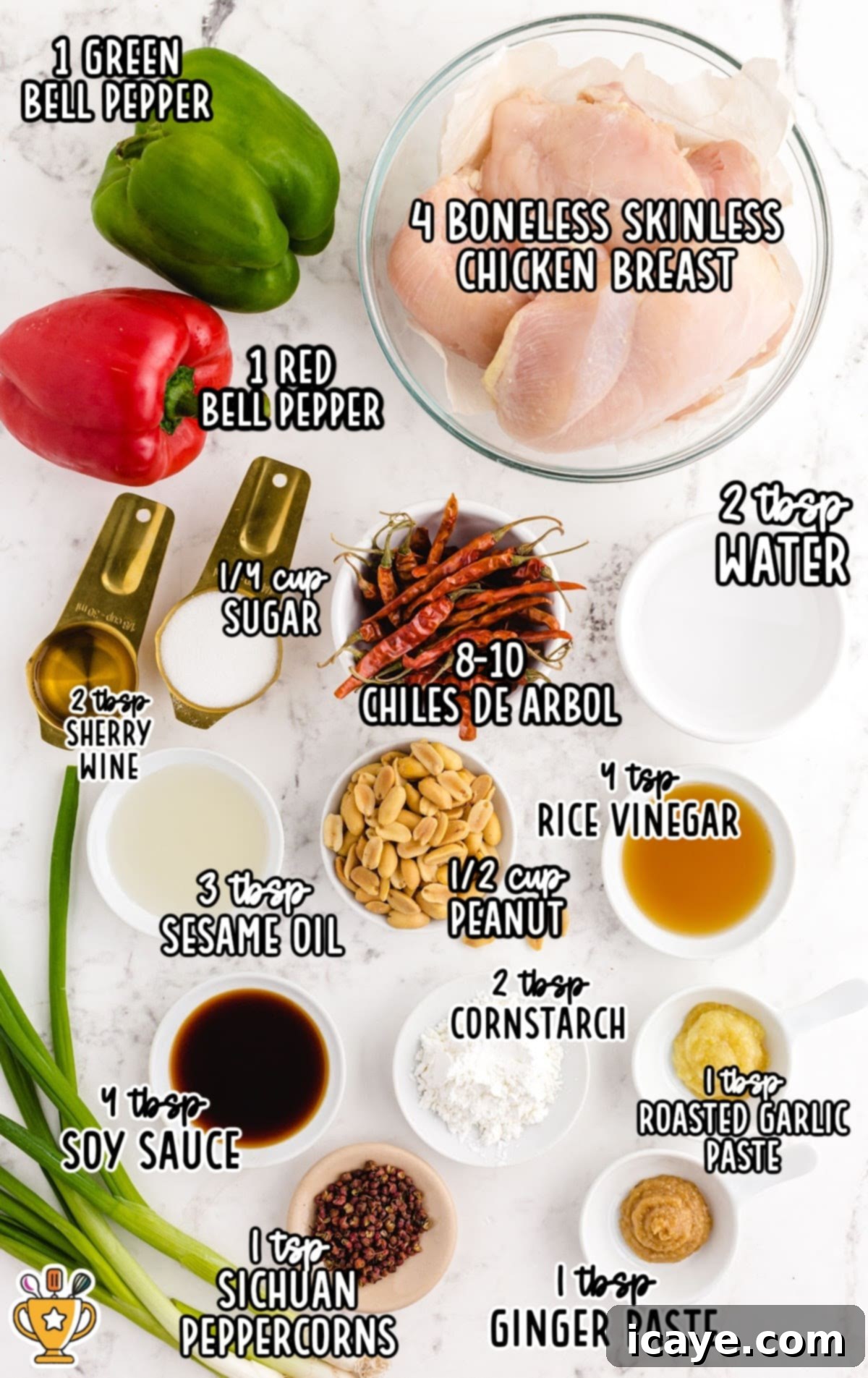
Gather these key ingredients to make the best Kung Pao Chicken recipe:
- Proteins: Boneless, skinless chicken breasts are ideal for their lean texture and ability to absorb marinades well. Cut into uniform 1-inch pieces for even cooking.
- Pantry Staples:
- Cornstarch: Essential for tenderizing the chicken and thickening the sauce, giving it that desirable glossy, clingy texture.
- Granulated Sugar: Provides the crucial sweetness that balances the spice and savory notes.
- Peanuts: Adds a wonderful crunch and nutty flavor, a hallmark of traditional Kung Pao Chicken.
- Spices & Seasonings:
- Sichuan Peppercorns: These unique peppercorns offer a distinctive “ma la” (numbing and spicy) sensation, which is a key element of authentic Sichuan cuisine.
- Chiles de Árbol: Dried red chilies that bring a pleasant, fiery heat to the dish. Adjust quantity to your spice preference.
- Ginger Paste (or Freshly Minced): Infuses a warm, aromatic, and slightly pungent flavor that is fundamental to Chinese cooking.
- Roasted Garlic Paste (or Freshly Minced): Provides a deep, savory, and fragrant base for the sauce.
- Oils, Sauces & Vinegars:
- Dry Sherry: Used in the marinade to tenderize the chicken and in the sauce for a subtle depth of flavor. A good quality dry sherry is recommended.
- Soy Sauce: The primary source of umami and saltiness. Opt for a good quality light or all-purpose soy sauce.
- Sesame Oil: Adds a rich, nutty aroma and flavor, especially when drizzled in at the end.
- Rice Vinegar: Contributes a tangy acidity that brightens the sauce and balances its richness.
- Fresh Produce:
- Red Bell Pepper: Adds vibrant color, a sweet crunch, and mild flavor.
- Green Bell Pepper: Offers a slightly more herbaceous flavor and another layer of crisp texture.
- Green Onions (Scallions): Used for both flavor within the dish and as a fresh, aromatic garnish.
Customize Your Kung Pao: Substitutions and Additions
One of the best aspects of cooking at home is the freedom to customize. This Kung Pao Chicken recipe is incredibly versatile, allowing for easy ingredient swaps and exciting mix-ins to suit your taste and what you have on hand. These creative changes will add your personal spin to every bite, while still retaining that delightful sweet and spicy kick. Don’t be afraid to experiment – try one or combine a few!
- Substitute Apple Cider Vinegar for Rice Vinegar: If you don’t have rice vinegar, apple cider vinegar is an excellent alternative. It offers a similar tangy acidity, ensuring your sauce remains bright and balanced.
- Swap Bell Peppers with Other Veggies: While bell peppers are classic, feel free to toss in other crunchy vegetables like broccoli florets, sugar snap peas, or sliced zucchini. This instantly transforms it into a customized stir-fry with added texture and nutrients.
- Use Cashews for Peanuts: For a different kind of nutty crunch and a slightly sweeter, buttery flavor, trade peanuts for roasted cashews. This substitution is popular and equally delicious.
- Switch to Chicken Thighs for Juicier Bites: Boneless, skinless chicken thighs are a fantastic alternative to chicken breasts. They are naturally juicier and more forgiving, adding a richer flavor and tender texture that many prefer in stir-fries.
- Add Chili Flakes for Extra Heat: If you love a more fiery dish, sprinkle in a dash of red chili flakes (gochugaru or crushed red pepper) during the cooking process. This is a simple way to crank up the heat without significantly altering the sauce’s core flavor.
- Incorporate Water Chestnuts or Bamboo Shoots: For additional authentic texture and a subtle sweetness, consider adding canned water chestnuts or bamboo shoots, drained and sliced. They provide a unique crunch.
- Introduce Different Proteins: While chicken is traditional, this sauce pairs wonderfully with other proteins. Try making it with shrimp, sliced pork loin, or even firm tofu for a vegetarian option.
- Enhance with Hoisin Sauce: A tablespoon of hoisin sauce can add an extra layer of savory, sweet, and slightly tangy flavor to the sauce, deepening its complexity.
- Boost Umami with Mushroom Powder: For an extra depth of umami, especially if reducing soy sauce, a pinch of mushroom powder can work wonders.
Step-by-Step Guide: Crafting Delicious Kung Pao Chicken
Making restaurant-quality Kung Pao Chicken at home is simpler than you think! Follow our detailed step-by-step instructions, accompanied by helpful pictures, and our insider tips and tricks. We’ve broken down every part of the process to ensure you can create this beloved Chinese dish with confidence and ease. Let’s get cooking!
Mastering the Marinade for Tender Chicken
- Taste Test Your Marinade: Before adding the chicken, give the marinade a quick taste. This allows you to adjust the sweet and salty balance. If it tastes too salty, stir in a touch more sugar or a splash of water. If it leans too sweet, a small dash of soy sauce will help. This small step can significantly impact the final flavor.
- Don’t Skip the Cornstarch Slurry: This step takes mere seconds but is crucial! Ensure the cornstarch fully dissolves in the water to avoid lumps. The cornstarch not only tenderizes the chicken, giving it a velvety texture, but also helps the sauce cling perfectly, providing that smooth, authentic takeout-style finish.
- Uniform Chicken Pieces: Cut your chicken breasts into even 1-inch pieces. This ensures that all the chicken cooks uniformly and thoroughly, preventing some pieces from being overcooked while others are undercooked. Toss the chicken thoroughly in the marinade using tongs or your hands, making sure every piece is evenly coated for maximum flavor penetration.
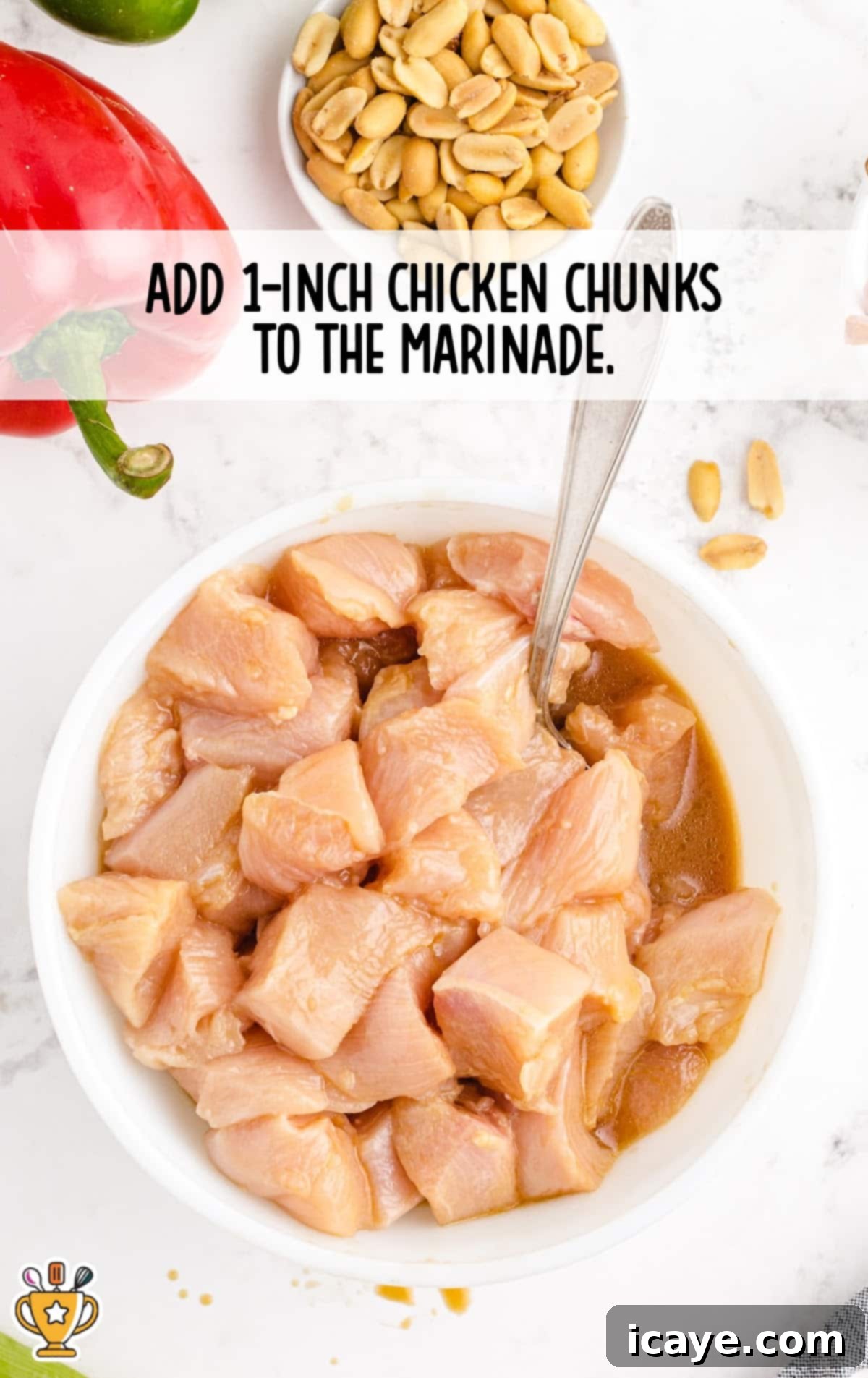
Once coated, allow the chicken to marinate for approximately 20 to 30 minutes in the refrigerator. Avoid marinating overnight, as the acidity in some components can start to break down the chicken too much, potentially affecting its desired tender texture.
Preparing the Flavor-Packed Sauce and Vegetables
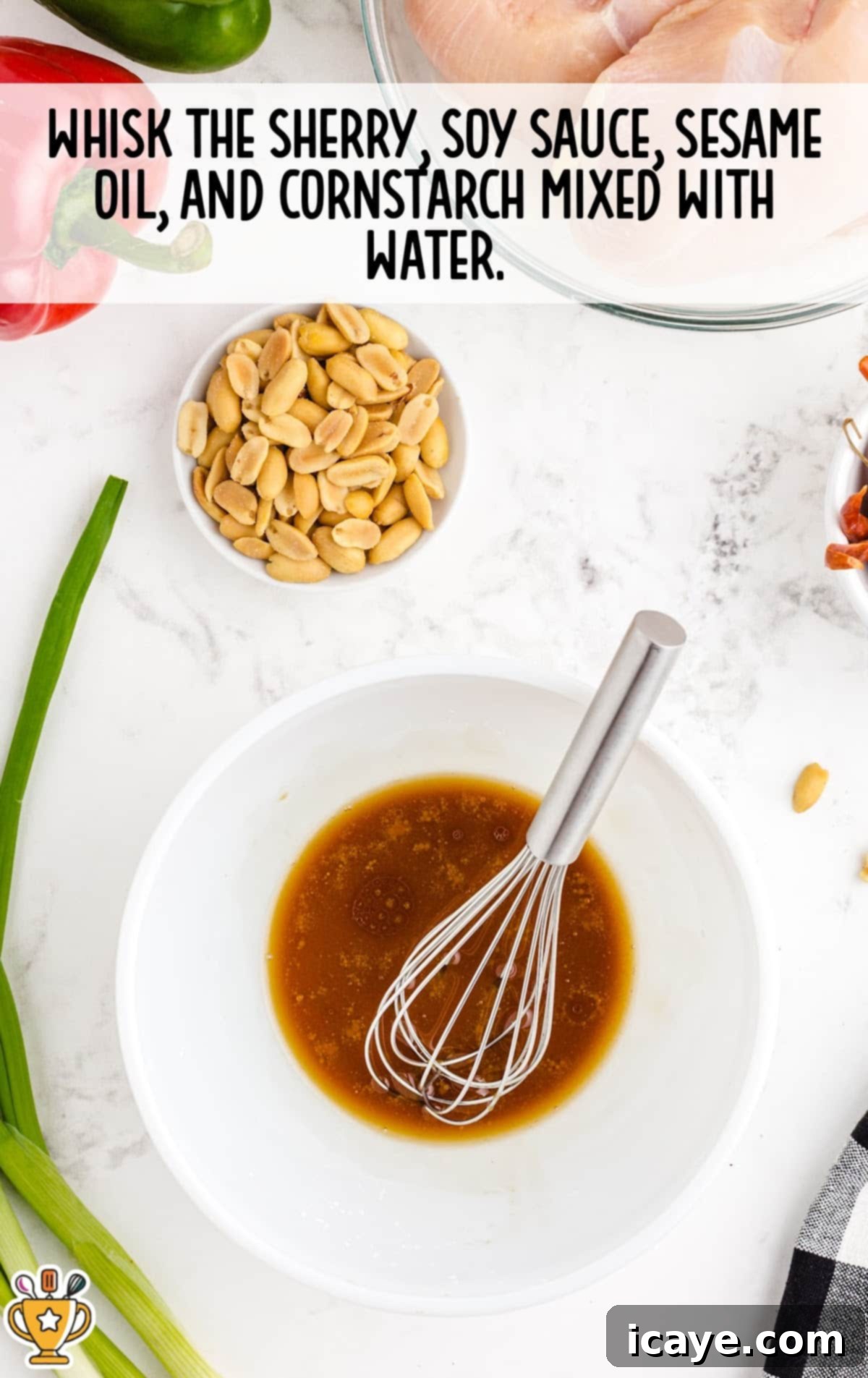
FIRST STEP: Prepare the Kung Pao Sauce. In a medium-sized bowl, combine the remaining 1 tablespoon of dry sherry, 3 tablespoons of soy sauce, 1 tablespoon of sesame oil, granulated sugar, rice vinegar, ginger paste, garlic paste, Sichuan peppercorns, and the remaining cornstarch/water slurry. Whisk vigorously until all ingredients are thoroughly combined and the mixture is smooth. Set this aside as your vibrant Kung Pao sauce base.
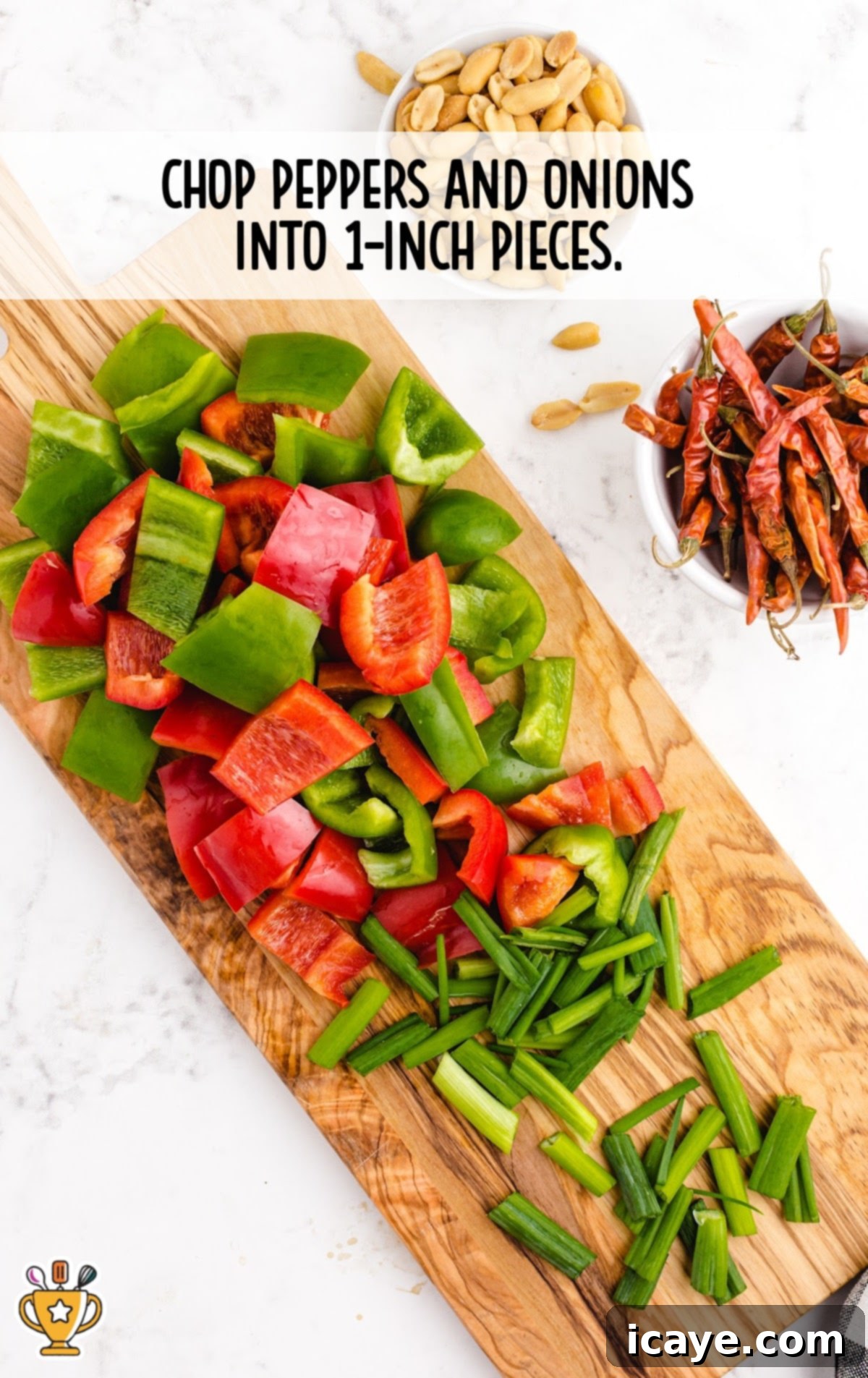
SECOND STEP: Prepare the Bell Peppers. Take your red and green bell peppers. Carefully remove their stems and discard them. Slice the bell peppers in half and remove the seeds and any white pith from the inside. This ensures a clean, crisp texture. Discard the tougher white parts from the base of the green onions.
THIRD STEP: Chop Vegetables. Cut the prepared bell peppers into uniform 1-inch chunks. Similarly, slice the green onions into 1-inch sections. This consistent sizing is important for even cooking and a visually appealing dish.
Perfectly Cooking the Chicken
FOURTH STEP: Drain Marinade. Once your chicken has finished marinating, carefully drain off any excess liquid from the bowl. This prevents the chicken from steaming instead of browning in the pan.
FIFTH STEP: Sauté the Chicken. Heat 1 to 2 tablespoons of sesame oil in a large skillet or wok over high heat. High heat is crucial for achieving a good sear. Add the drained chicken pieces to the hot skillet, being careful not to overcrowd the pan (cook in batches if necessary). Sauté the chicken, stirring frequently, until it is beautifully browned on all sides and cooked through, appearing white in the center. Once cooked, remove the chicken from the pan and set it aside on a clean plate.
Bringing It All Together: Cooking The Kung Pao Sauce and Final Assembly
FIRST STEP: Sauté Aromatics and Peppers. Add one more tablespoon of sesame oil to the same skillet you used for the chicken. Introduce the bell peppers and the dried chiles de árbol. Sauté quickly for about 1 minute. The goal here is to slightly soften the peppers while maintaining their crispness and to allow the chiles to infuse their heat into the oil.
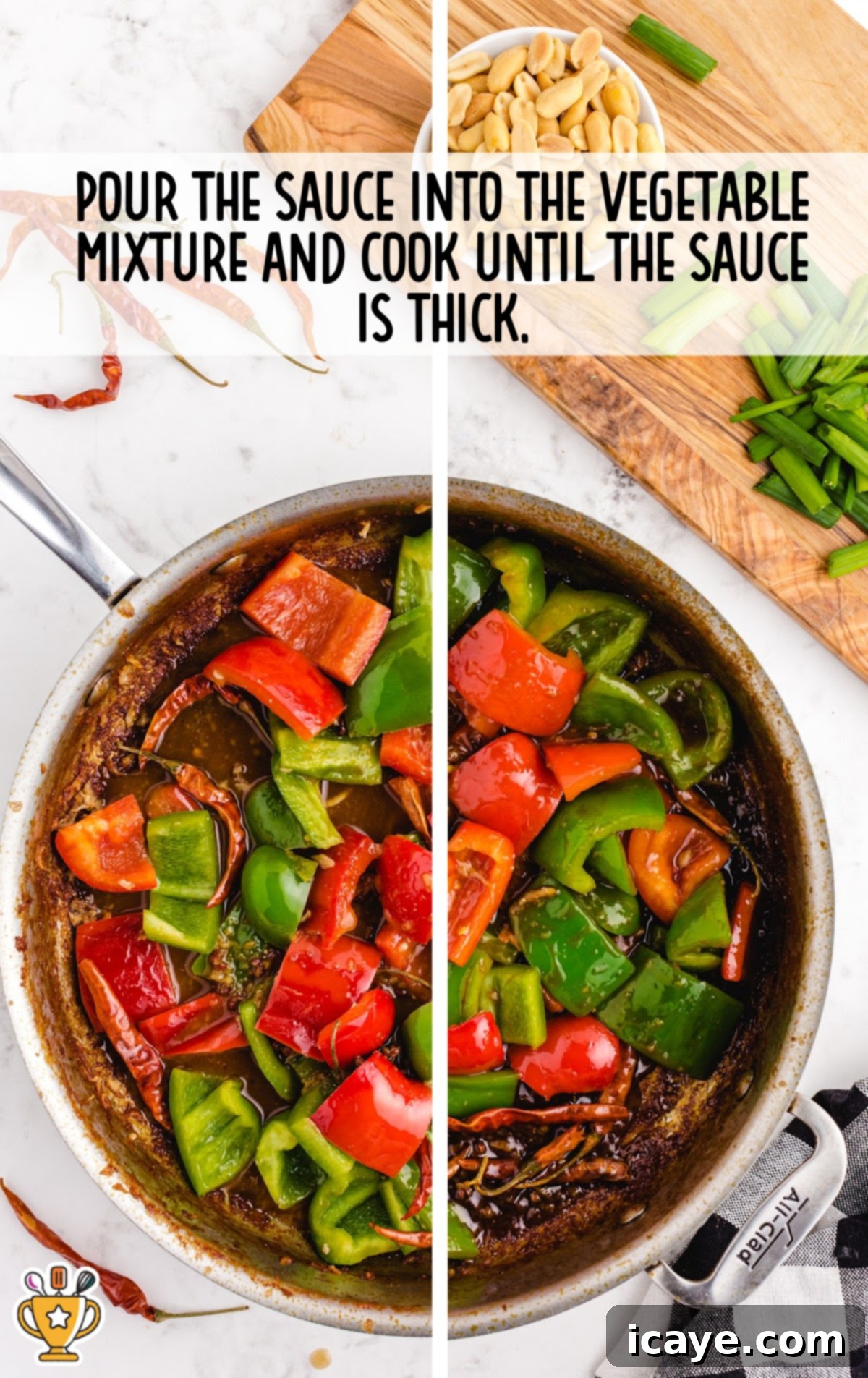
SECOND STEP: Thicken the Sauce. Pour the whisked Kung Pao sauce mixture into the skillet with the sautéed peppers and chiles. Cook for 1 to 2 minutes, stirring continuously, until the sauce visibly thickens and achieves a glossy consistency. The cornstarch in the slurry will work its magic to create this perfect texture.
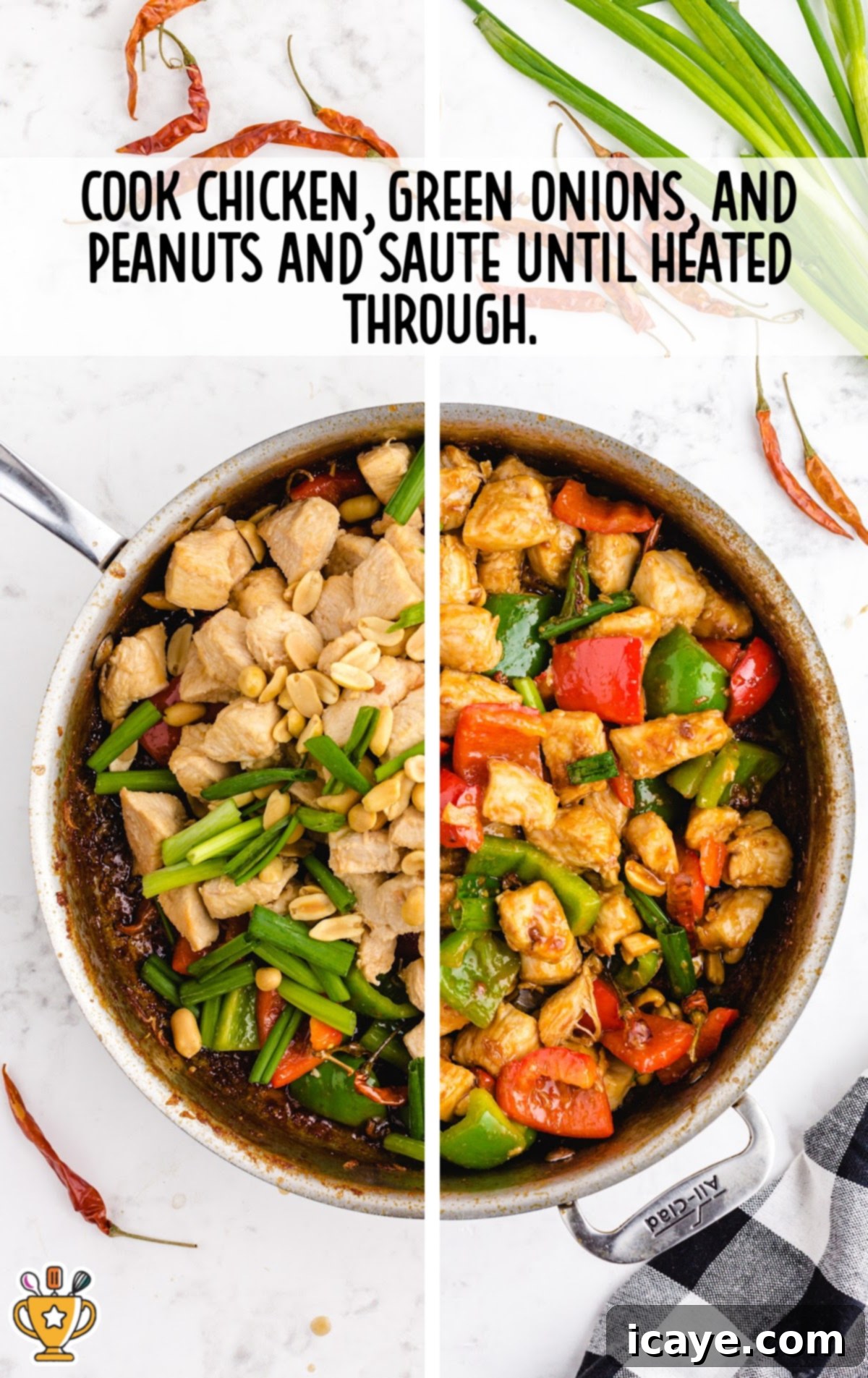
THIRD STEP: Combine All Ingredients. Return the cooked chicken to the pan with the thickened sauce. Add the sliced green onions and crunchy peanuts. Sauté all the ingredients together for another 1-2 minutes, stirring gently to ensure everything is thoroughly coated in the sauce and warmed through. This final stir-fry integrates all the flavors beautifully.
FOURTH STEP: Serve Immediately. Kung Pao Chicken is best enjoyed fresh off the skillet. Serve it piping hot over your favorite rice or noodles and get ready to savor every bite of this irresistible dish!
Serving Suggestions for Your Kung Pao Masterpiece
This Kung Pao Chicken recipe is wonderfully versatile, perfect for a multitude of occasions. It’s quick enough for those busy weeknights and undeniably delicious for entertaining guests. Here are some fantastic ways to serve your homemade Kung Pao Chicken:
- Weeknight Family Dinners: This recipe shines on busy evenings due to its rapid cooking time and universally appealing taste. The sweet and savory sauce, combined with the delightful crunch of peanuts, often makes it a hit even with kids. For a complete takeout-style experience, pair it with our Better Than Takeout Chinese Fried Rice or easy Crab Rangoon. A simple bowl of steamed white rice is also a classic and perfect accompaniment.
- Casual Parties or Potlucks: Kung Pao Chicken is an excellent choice for casual gatherings, game nights, or potlucks—it consistently disappears fast! Its robust flavors hold up well, and it can even be kept warm in a slow cooker for larger crowds. Create a full Asian-inspired spread by pairing it with our refreshing Chinese Chicken Salad or crowd-pleasing Sweet and Sour Meatballs.
- Cozy Dinners During Cooler Months: The bold, spicy kick of the sauce makes this dish particularly comforting and satisfying for fall and winter meals. It offers a warmth that’s perfect for chilly evenings. For an even cozier dinner, consider serving it alongside a classic hot and sour soup or our popular Egg Roll in a Bowl for a truly heartwarming meal that everyone will appreciate.
- Meal Prep for Healthy Lunches: This dish reheats beautifully, making it an ideal candidate for meal prepping. Divide portions of Kung Pao Chicken with a side of steamed brown rice or quinoa into airtight containers for healthy, delicious, and convenient lunches throughout the week.
- Elevated Dinner Experience: To elevate the meal, consider serving it with delicate sesame noodles or a crisp, lightly dressed cucumber salad. A sprinkle of extra toasted sesame seeds or finely chopped cilantro as a garnish can also add a touch of elegance.
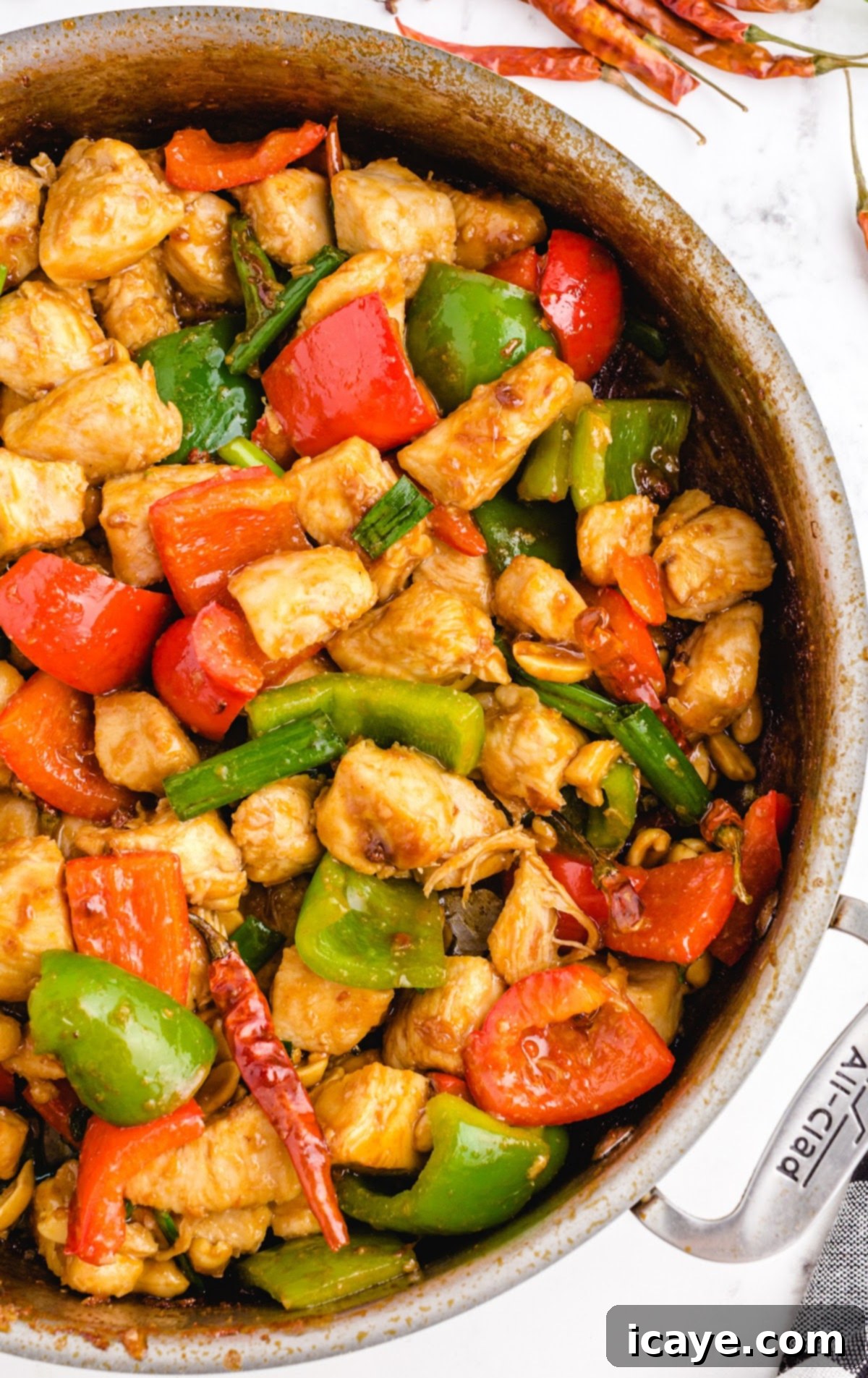
Why This Kung Pao Chicken Recipe Will Become Your Favorite
This Kung Pao Chicken recipe has rapidly become a fan favorite among our readers, and it’s truly easy to understand why. It’s not just a meal; it’s an experience that delivers incredible flavor and convenience without the usual fuss of complex cooking. You get all the comforting, bold tastes of your beloved takeout dish, prepared right in your own kitchen in under an hour, making it an unbeatable option for any day of the week.
Here are the compelling reasons why this Kung Pao Chicken recipe is always a resounding hit:
- Incredibly Quick to Make: Forget long hours in the kitchen. This recipe is designed for speed, allowing you to have a hearty and flavorful dinner on the table surprisingly fast, even on your busiest weeknights. From prep to plate, it’s a time-saver.
- No Fancy Tools Needed: You don’t need a professional wok or specialized equipment. All you require is one large skillet (or a standard wok if you have one) and a few common pantry staples. This simplicity makes it approachable for every home cook.
- Bold, Perfectly Balanced Sweet and Spicy Flavor: The exquisite sauce is the heart of this dish. It delivers a captivating sweet heat that is perfectly balanced with savory notes, making each bite an exciting burst of flavor that’s deeply satisfying and highly addictive.
- Exceptional Texture Every Time: Say goodbye to dry chicken. Our method ensures the chicken stays incredibly juicy and tender, while the bell peppers maintain their crisp, vibrant texture. The addition of peanuts provides that essential, delightful crunch, creating a harmonious textural symphony.
- A Guaranteed Crowd-Pleaser: This dish is a universal favorite. Kids, teenagers, and adults alike consistently go back for seconds (and sometimes thirds!). Expect no complaints and certainly no leftovers when this Kung Pao Chicken is on the menu. It’s a dish that genuinely unites everyone at the table.
- Foolproof Step-by-Step Guidance: We’ve taken all the guesswork out of cooking. With clear, easy-to-follow directions, detailed photos for every critical stage, and smart tips, even beginners can achieve perfect results. You’ll gain confidence in your cooking skills with every successful dish.
- Versatile and Adaptable: While delicious as is, the recipe offers fantastic opportunities for customization. Easily adjust the spice level, swap vegetables, or even change the protein to suit dietary needs or personal preferences, making it endlessly repeatable.
Kung Pao Chicken is consistently a smart and delicious choice for dinner, and our enthusiastic readers continuously return to make this particular recipe again and again, solidifying its place as a beloved staple!
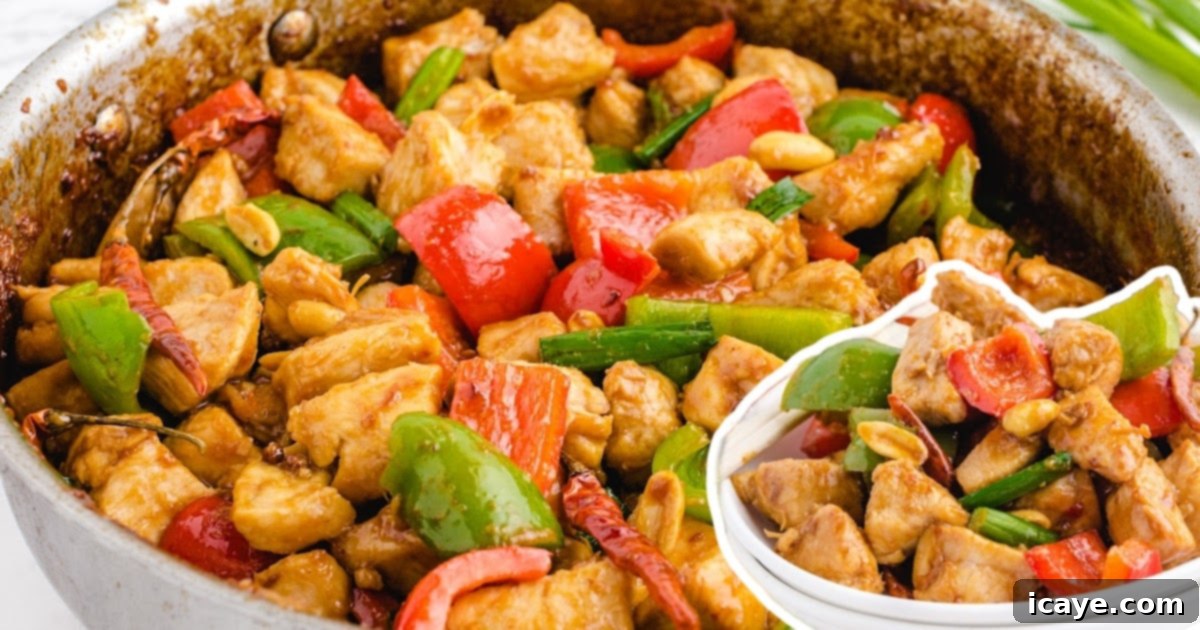
Kung Pao Chicken Recipe FAQs
Can I use a different cut of chicken in this recipe?
Absolutely! While chicken breasts are common, boneless, skinless chicken thighs are an excellent alternative. Thighs tend to stay juicier and more tender in stir-fry recipes, offering a richer flavor. Just ensure they are cut into uniform 1-inch pieces.
Do I need to marinate the chicken first?
Yes, marinating the chicken is highly recommended. Even a short marinade of 15 to 20 minutes makes a significant difference, infusing flavor into the chicken and tenderizing it, which results in a much more enjoyable texture. Don’t skip this crucial step!
How spicy is this Kung Pao Chicken recipe?
This recipe provides a mild to medium level of heat, primarily from the chiles de árbol and Sichuan peppercorns. You can easily adjust the spice level to your preference by adding more or fewer chiles, or by incorporating a dash of red pepper flakes for extra kick.
Can I cook Kung Pao Chicken without a wok?
Yes, a large nonstick skillet or a heavy-bottomed pan works perfectly well if you don’t own a wok. The key is to keep the heat high and stir-fry frequently to ensure even cooking and proper browning of the ingredients.
What vegetables go best in Kung Pao Chicken?
Beyond the classic bell peppers and green onions, other vegetables that complement Kung Pao Chicken beautifully include zucchini, carrots, snow peas, or broccoli florets. Choose vegetables that cook relatively fast and retain a nice crunch when stir-fried.
Why do I need a cornstarch slurry for Kung Pao Chicken?
The cornstarch slurry is vital for two reasons: it helps tenderize the chicken by creating a protective coating, and it’s the secret to thickening the sauce, giving it that characteristic glossy, smooth finish that clings perfectly to the chicken and vegetables.
How long does it take to make Kung Pao Chicken?
From start to finish, this delicious Chinese chicken dish can be prepared in about an hour, including prep and marinating time. This makes it an ideal choice for fast, easy, and incredibly flavorful dinners on busy weeknights.
Do I need to use fresh garlic and ginger in Kung Pao Chicken?
Freshly minced garlic and ginger will undoubtedly provide the best, most vibrant flavors. However, if fresh ingredients aren’t available, jarred ginger and garlic paste are acceptable substitutes and still contribute essential aromatic notes to the dish.
Can I double the Kung Pao Chicken recipe?
Yes, you can easily double the recipe to feed a larger crowd or for meal prep. When doubling, it’s crucial to cook the chicken and vegetables in batches to avoid overcrowding the pan, which can cause them to steam rather than brown effectively.
How do I get the veggies to stay crisp in Kung Pao Chicken?
To ensure your vegetables remain crisp and vibrant, cut them into even pieces, and stir-fry them quickly over high heat. Avoid overcooking, and don’t overcrowd your pan during the stir-frying process; this helps them sear rather than steam.
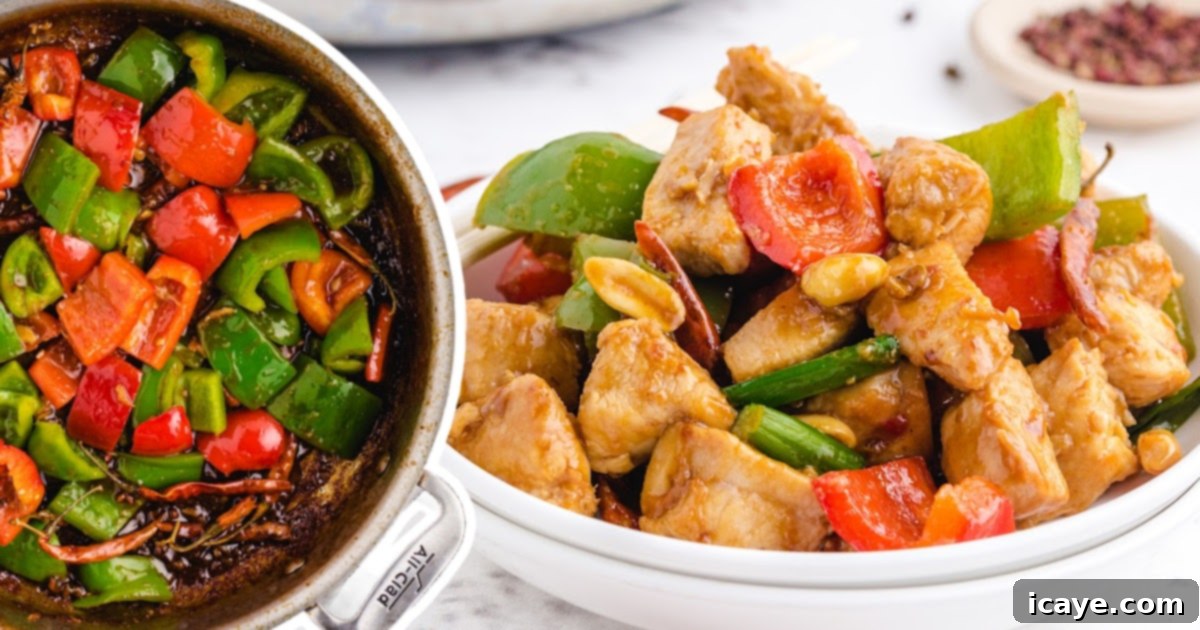
Serving Kung Pao Chicken FAQs
What’s the best way to serve Kung Pao Chicken for dinner?
The classic and most satisfying way to serve Kung Pao Chicken for dinner is spooned generously over a bed of freshly steamed white rice. It’s also excellent with brown rice, jasmine rice, or even a side of stir-fried noodles for a quick, comforting, and flavorful weeknight meal.
Can I serve Kung Pao Chicken at a party?
Absolutely! Kung Pao Chicken makes a fantastic party dish. Serve it in a large, attractive serving dish with a communal spoon for easy self-serving at casual gatherings, potlucks, or game nights. Its vibrant flavors are always a hit.
Is Kung Pao Chicken good for kids?
Many children adore Kung Pao Chicken, especially due to its appealing sweet and savory notes. To make it more kid-friendly, simply reduce the amount of chiles de árbol or omit the red pepper flakes for a milder version. The tender chicken and crunchy peanuts are often very popular with younger palates.
Should I garnish Kung Pao Chicken before serving?
Garnishing adds both visual appeal and extra texture. We recommend sprinkling extra roasted peanuts and thinly sliced fresh green onions over the top just before serving. This adds an extra layer of crunch and a beautiful pop of fresh color, enhancing the overall presentation and experience.
Can I serve Kung Pao Chicken in meal prep containers?
Yes, this dish is wonderfully suitable for meal prep. Divide the cooked Kung Pao Chicken into individual airtight containers, ideally paired with a portion of rice or noodles, for convenient and delicious ready-to-go lunches or dinners throughout the week.
Is Kung Pao Chicken good for special occasions?
While easy enough for weeknights, its bold flavors and impressive presentation also make Kung Pao Chicken a great choice for celebrating birthdays, holidays, or special family dinners. It feels like a treat without requiring extensive effort, allowing you to enjoy your guests.
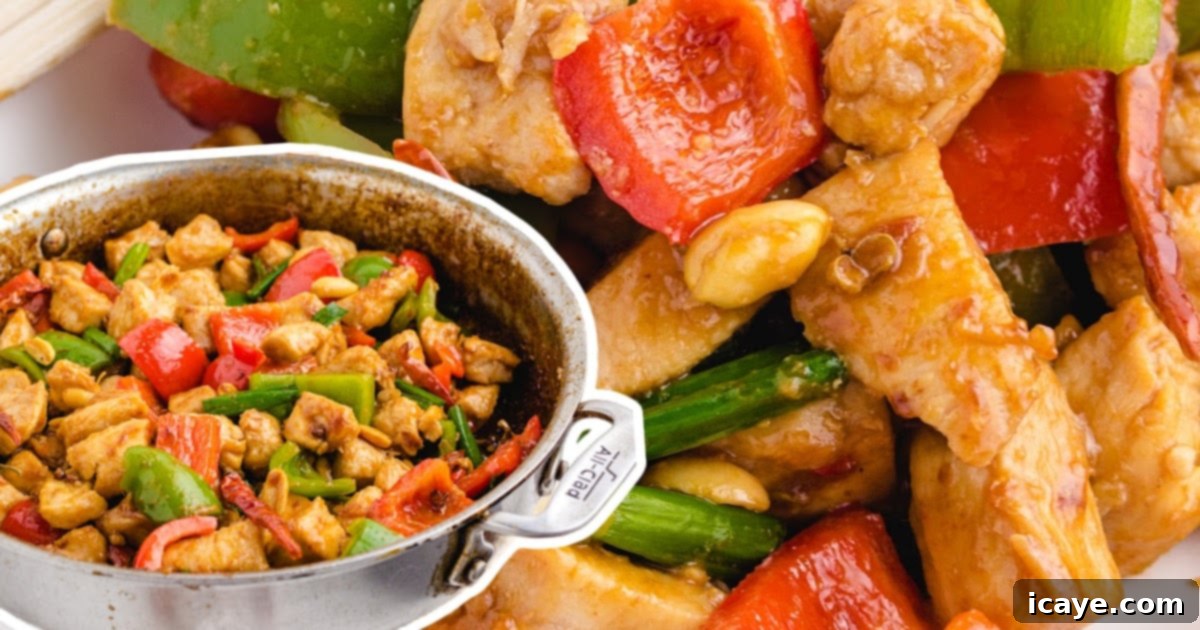
Storing Your Kung Pao Chicken: FAQs
Proper storage is key to maintaining the delicious flavor and texture of your homemade Kung Pao Chicken. Follow these simple directions, tips, and tricks to ensure your leftovers stay fresh, the sauce remains thick, and the chicken juicy every time you reheat it.
Can I prepare Kung Pao Chicken ahead of time?
Yes, you can certainly prepare components of Kung Pao Chicken ahead of time. Cook the chicken and sauté the veggies separately. Store them in distinct airtight containers in the refrigerator for up to one day. When ready to serve, quickly combine and warm with the freshly made sauce for the best texture.
What’s the best way to store leftovers?
To keep your leftovers fresh and flavorful, place the cooled Kung Pao Chicken in an airtight container. Store it in the refrigerator and aim to consume it within three days for optimal taste and texture. Ensure it cools completely before sealing to prevent condensation.
Can I freeze Kung Pao Chicken?
Yes, Kung Pao Chicken freezes quite well. For best results, freeze the cooked chicken and sauced vegetables in a sealed, freezer-safe container for up to three months. It’s often recommended to omit adding the peanuts until reheating, as they can become soggy when frozen and thawed.
How do I thaw and reheat frozen Kung Pao Chicken?
To thaw, transfer the frozen Kung Pao Chicken to the refrigerator and let it thaw overnight. For reheating, gently warm it in a skillet over medium heat, stirring frequently to prevent sticking and ensure it heats through evenly. Add a splash of water or chicken broth if the sauce appears too thick.
Should I reheat on the stovetop or in the microwave?
For the best possible texture and to maintain the integrity of the sauce, reheating on the stovetop is generally preferred. Heat over medium, stirring often, until the sauce re-thickens and all ingredients are thoroughly heated through. This helps prevent the chicken from drying out.
Can I microwave to reheat it faster?
Yes, you can use a microwave for quicker reheating, especially for single servings. Heat in thirty-second bursts, stirring well between each interval. If the sauce becomes too thick during reheating, add a small splash of water or chicken broth to restore its consistency.
More Delightful Chinese Dinner Recipes
- Full List of Chinese Dinner Recipes
- Firecracker Chicken
- Chinese Chicken Salad
- Chicken Fried Rice
- Sweet and Sour Meatballs
- Firecracker Chicken
- Crispy Honey Chicken
- Kung Pao Chicken
- Crockpot Orange Chicken
- Bourbon Chicken
- Korean Beef
- Beef and Broccoli
- Mongolian Beef And Noodle Recipe
- Egg Roll In A Bowl
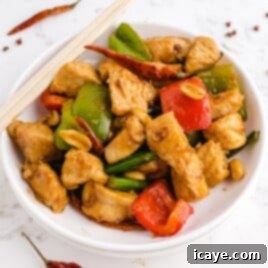
Classic Kung Pao Chicken Recipe
Pin Recipe
Ingredients
- 4 boneless skinless chicken breasts (cut into 1-inch pieces)
- 2 tablespoons dry sherry (divided in half; can substitute with apple cider vinegar or balsamic vinegar)
- 4 tablespoons soy sauce (divided into 1 tablespoon for marinade and 3 tablespoons for sauce)
- 3 tablespoons sesame oil (divided into thirds, plus more as needed)
- 2 tablespoons cornstarch dissolved in 2 tablespoons of water (divided in half for marinade and sauce)
- ¼ cup granulated sugar
- 4 teaspoons rice vinegar
- 1 tablespoon ginger paste (or finely minced fresh ginger)
- 1 tablespoon roasted garlic paste (or finely minced fresh garlic)
- 1 teaspoon Sichuan peppercorns
- 1 red bell pepper (cut into 1-inch chunks)
- 1 green bell pepper (cut into 1-inch chunks)
- 3 green onions (sliced into 1-inch sections, plus more for garnish if desired)
- 8 to 10 chiles de árbol (whole, dried)
- ½ cup roasted peanuts
DIRECTIONS
Marinade Preparation
- 1. Cut the boneless, skinless chicken breasts into uniform 1-inch chunks. Pat them thoroughly dry with a paper towel to help with browning later.
- 2. In a medium bowl, whisk together 1 tablespoon dry sherry, 1 tablespoon soy sauce, 1 tablespoon sesame oil, and 1 tablespoon of cornstarch mixed with 1 tablespoon of water (this forms half of your cornstarch slurry). Whisk until the marinade ingredients are thoroughly combined and smooth, with no cornstarch lumps.
- 3. Add the chicken pieces to the prepared marinade and toss well, ensuring every piece is evenly coated. Set the bowl aside in the refrigerator for 20 to 30 minutes to allow the chicken to absorb the flavors and tenderize.
Sauce and Vegetable Preparation
- 1. In a separate medium bowl, whisk together the remaining 1 tablespoon dry sherry, 3 tablespoons of soy sauce, granulated sugar, 1 tablespoon sesame oil, rice vinegar, ginger paste, garlic paste, Sichuan peppercorns, and the remaining cornstarch/water slurry. Whisk until all ingredients are well combined and smooth. This is your Kung Pao sauce.
- 2. Prepare the bell peppers: remove the stems and seeds, then discard them. Also, discard the tougher white parts from the base of the green onions.
- 3. Cut the red and green bell peppers into uniform 1-inch chunks. Slice the green onions into 1-inch sections. Consistent sizing helps with even cooking.
Cooking The Chicken
- 1. Once marinated, carefully drain any excess liquid from the chicken pieces and discard it. This ensures the chicken will brown nicely.
- 2. Heat 1 to 2 tablespoons of sesame oil in a large skillet or wok over high heat until shimmering. Add the drained chicken and sauté, stirring frequently, until it is browned on all sides and cooked through (no longer pink inside). Remove the cooked chicken from the pan and set it aside on a clean plate.
Bringing the Sauce and Dish Together
- 1. Add 1 more tablespoon of sesame oil to the same skillet. Add the bell peppers and the whole dried chiles de árbol. Sauté for 1 minute, just until the peppers begin to soften slightly and the chiles infuse their heat.
- 2. Pour the prepared Kung Pao sauce mixture into the skillet with the sautéed vegetables. Cook for 1 to 2 minutes, stirring continuously, until the sauce thickens and becomes glossy.
- 3. Return the cooked chicken to the pan. Add the sliced green onions and the roasted peanuts. Sauté for another 1-2 minutes, stirring gently to ensure all ingredients are coated in the sauce and warmed through completely.
- 4. Serve your delicious homemade Kung Pao Chicken immediately, ideally over steamed rice or noodles.
Notes
- The cornstarch slurry is crucial for achieving that authentic, glossy, and perfectly thickened Kung Pao sauce. Ensure it’s well mixed before adding to prevent lumps.
- This dish carries a mild-to-medium heat and spice, primarily from the chiles de árbol and the unique tingling sensation of Sichuan peppercorns. If you desire a spicier dish, you can briefly sauté the peppercorns and/or the chiles in a little oil before adding them to the sauce, or simply increase their quantity.
- To maximize flavor and tenderness, ensure the chicken is cut into uniform pieces and allowed adequate time to marinate.
- For extra freshness and visual appeal, consider garnishing with a sprinkle of additional chopped green onions or a handful of extra peanuts right before serving.